Hormuz, Tariffs, Spurs, and Complex Systems

June 28, 2026
Matt Goff, Editor, Networthy Publishing
For decades, energy analysts feared the disaster scenario: if Iran ever closed the Strait of Hormuz, the narrow waterway that carries a fifth of the world's oil, the result would be catastrophe. Some forecasts reached for $200-a-barrel oil, critical shortages, and a global recession. The logic was sound, and the people making the call knew every bit of minutia about world oil markets.
In late February 2026, the scenario stopped being hypothetical. The U.S. and Israel struck Iran, Iran closed the Strait, and tanker traffic fell to nearly zero for over 100 days. The International Energy Agency called it the largest oil supply disruption in history. The exact trigger everyone had feared actually pulled.
And oil peaked around $120 — with one brief spike that brushed $126 before falling back.
That's not nothing, but $120 is not $200. Events that unfolded baffled those same experts. By late May, oil had already fallen back into the low $90s seemingly shrugging the whole thing off.
The experts nailed the direction. What they couldn't size was the reaction. Once the crisis hit, the world adjusted faster than any forecast assumed: countries released emergency reserves, other producers pumped more, shippers found workarounds, drivers used less as prices climbed, and a ceasefire came together before things got desperate. The shock got absorbed at a far lower price than the model predicted — because the economy isn't a clean predictable machine you can plug numbers into. It's millions of people reacting in real time, and their reactions bend the very outcome the forecast was built on.
Tariff drama in 2025 proved to be a similar surprise. The warning was that sweeping tariffs would send consumer prices through the roof. A year later we see that businesses stockpiled ahead of time, supply chains rerouted, some exporters ate the cost, and exemptions piled up. Prices did rise — but never the sharp shock the headlines promised. Right idea, wrong size, wrong timing.
Even when the results seem so obvious, we need humility. Did you really think the Spurs would blow a 29 point lead? The odds were 99% in favor of a San Antonio victory at one point. The math was right, but players adapted to the circumstances, momentum shifted, and the unthinkable played out.
None of this means expert analysis is useless. The energy analysts understood that market better than almost anyone, and they were right about the direction but incapable of taking into account all of the possible scenarios and unknown variables. Afterward, the story makes perfect sense. Beforehand, it almost never does. By the way, AI allows for more comprehensive data analysis, but fundamentally is just as weak in reality of complex adaptive systems. Do you think Claude would have predicted the Spurs collapse?
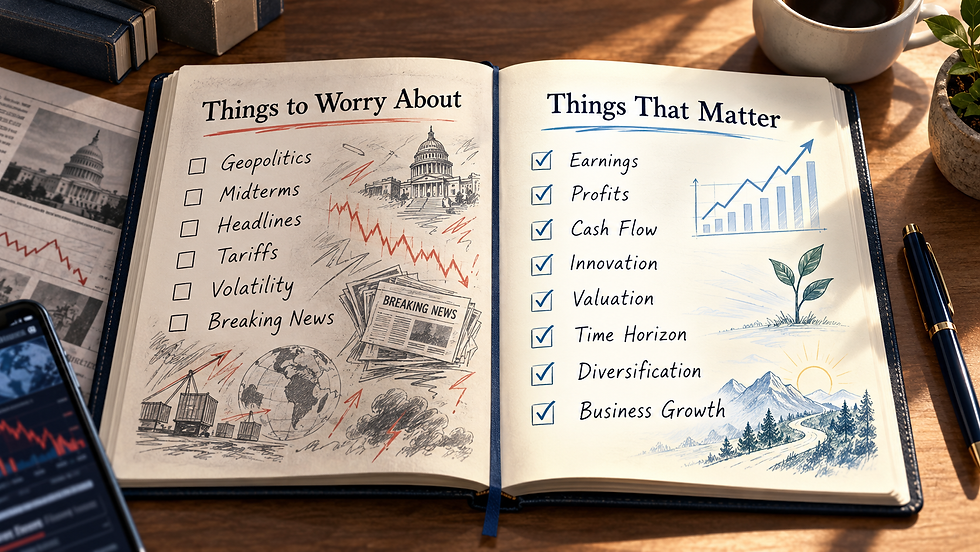
So here's the takeaway, especially before you let such predictions influence your investing: a prediction being true in direction tells you very little about whether to act on it. "This is dangerous," "this is overpriced," "this is a sure winner" — each can still be a losing bet if the size or the timing is off. The questions that matter aren't just Is this right? They're: How big, really? When? And what reactions am I not imagining?
Good planning prepares for many possible futures. Bad investing bets everything on one confident guess. With that said, based on their recent play I am boldly predicting that the US Men’s National Soccer Team will win the World Cup. I’m just not going to say when it will happen.